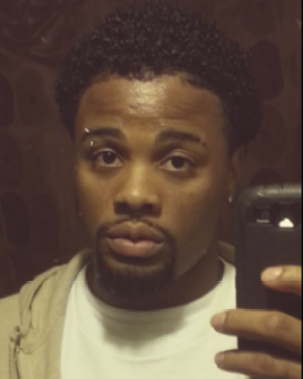
Amos Wells’ lawyers had one job: defend their client.
They didn’t. That’s why Texas is prepared to kill him.
On July 1, 2013 22-year-old Amos Joseph Wells III shot and killed three people. That tragedy is real, and this site will not ask you to look away from it.
Within an hour he walked into the Forrest Hills police station and turned himself in. He told them he’d “Done a bad thing.” Amos couldn’t stop crying. He’d done something he never thought he was capable of. At trial, the jury had to make one decision: would Amos spend the rest of his life in prison without the possibility of parole, or would the State of Texas execute him?
His own lawyers made it nearly impossible for the jury to choose anything but death. They presented the jury with a version of Amos stripped of the evidence that could have explained who he was and how he became that person.
The jury answered the question his defense had set them up to answer: Amos was dangerous, and there was nothing about him worth sparing. They had done this before.
Amos’ lawyers made hundreds of thousands of dollars representing people whose lives depended on them. Their clients were often Black, poor, and mentally ill. And they rarely won.
They didn’t present to the jury dozens of witnesses who would have painted the full picture of Amos’ background and struggles. The jury itself included a man who never should have been seated in the first place. Most shockingly, Amos’ own defense team introduced discredited (debunked) science that the prosecution ultimately used against him.
The Constitution guarantees every person accused of a crime a fair, fully informed sentencing decision. Even if the crime is murder. No one should be denied a defense that could make the difference between life and death. Instead Amos Wells got bad lawyering. Instead, Amos Wells got lawyers who refused to meet with him, who called him a “gangster” and a “thug” in open court, and who used a defense playbook that failed repeatedly in the past: introducing debunked science as a means of defense.
Eight Amendment quote here
This site won't ask you to decide whether Amos Wells is guilty. It will ask you to decide whether the process that sentenced him to death was Constitutionally just. Put plainly, no one should be executed because of bad lawyering.
When Amos Wells needed the defense that every American has a right to, he didn’t get it. Now Texas is prepared to kill him.
Why His Lawyers Sucked
Amos has been on death row in Tarrant County, Texas since November 2016.
His defense attorneys told the jury that Amos was a “defect” and a “gangster”. They called him an a**hole.
Amos’ lawyers didn’t tell the jury that Amos had lived his almost 22 years with severe mental illness and PTSD from sexual and physical abuse, that went largely untreated.
Rather than introduce mitigation evidence and witnesses, Amos’ defense team based their claims on Amos’ having a rare genetic condition - a “warrior gene” - that predisposed him to violence. Rather than call more than a dozen witnesses who could testify to Amos’ background and character, his attorneys presented to the jury discredited, junk science that advances racist tropes of the “dangerous Black man”.
Among those willing to testify for Amos was a corrections officer who Amos defended during an outbreak of violence in the prison. He was never called to testify.
The prosecutors used the defense team’s words and bad lawyering against Amos, saying “His own lawyers told you that he’s dangerous.”
The prosecutors used the defense’s evidence to prove their claim of future dangerousness, needed to secure a death sentence.
C2A
Overcome by remorse, Amos turned himself in to the police.
The prosecutor pointed to Amos during trial and remarked that Amos hadn’t shed a single tear. He asked the jury to consider this behavior as a lack of remorse for the victims or their families.
The prosecutor had seen Amos’ remorse, captured on video when he turned himself in to police. He knew that Amos sobbed, asking how he could apologize to the families for what he’d done. He knew that Amos asked one of the police officers for a hug. And he knew that during trial jury would never see that video, because he had argued to have it excluded. Now you can see what the jury never saw.
The “Best Defense” Poverty Could Buy
-
Amos’ lawyers used junk science to argue he was born violent.
They introduced testimony from a psychiatrist who told the jury that because of a gene variant, Amos Wells was 4.5 times more likely than the average person to be violent in the future. Scientists had already discredited this theory. The research behind the theory was conducted almost entirely on white men. Amos Wells is Black. The prosecution used this testimony from a defense witness to argue that Amos was likely to be dangerous in the future – a condition which is required to win the death sentence. His own lawyers delivered the argument that resulted in a death sentence.
-
A video that showed his remorse was hidden from the jury.
Within an hour of the crime, Amos turned himself in to law enforcement and told them he needed to be arrested because he had “done something bad.” He was sobbing, asking officers to shoot him, and begging to apologize to the victims' families. That footage was excluded from trial. The prosecutor knew the jury would never see this video, then pointed to Amos in court and told the jury that throughout the trial Amos had “never shed a tear.”
-
Every capital defendant has a right to an impartial jury. Amos didn’t get one.
A prospective juror wrote on his questionnaire, three times, that anyone guilty of murder should receive the death penalty. What came out under questioning was more complicated: he was a newly naturalized citizen, still unfamiliar with how U.S. courts worked, worried that failing to serve could somehow jeopardize his wife’s immigration status, and working two jobs on almost no sleep. He should never have been seated on a capital jury. The requirement that jurors be impartial and capable existed on paper. But Amos’ court-appointed attorneys, paid tens of thousands of dollars by the citizens of Tarrant County for their work on his case, never used it.
-
The jury had a right to hear about Amos Wells the person, and what he had endured.
Dozens of people could have testified about Amos including family, neighbors, teachers, church members, friends, co-workers, and a jail guard he protected from attack. Many were never contacted by his lawyers. As a result, the jury never heard vital mitigation information required when considering a death sentence. Had this mitigation information influenced the decision of even one juror, Amos would not have been sentenced to death.
Current Legal Status.
On March 30, 2026 the U.S. Supreme Court declined to intervene in Amos’ case, despite the clear evidence that he should not have received a sentence of death under the circumstances.
That closed the federal appeals process, but it did not answer the questions this case raised.
As legal options are dwindling for Amos, there is still a path forward that runs through clemency. A clemency petition asks the Texas Board of Pardons and Paroles and the Governor to do what the courts would not: look at everything the jury never saw, and recognize that Amos did not receive justice. In fact, his lawyers acted against him. Now, justice requires your voice at every step to advocate for Amos and for his life.
Take Action.
You do not have to think Amos Wells is a good person to believe the process that sentenced him to death was rigged.
A death sentence built on bad science, excluded evidence, and lawyers who gave the prosecution its winning argument is not justice. It reflects a system designed to execute people who the powerful cast aside.
A new defense team is preparing a clemency petition for Amos Wells. Add your name now to be among the first to sign when it's ready, and to help build public awareness in the meantime. Sign up to be notified using the form below.
Stay Informed.
Add your name to stay informed and ready to act.